
Singapore Mega-Deal Volume Rebounds 49% as REITs Targets Grade-A Core Assets
Concurrently, Singapore’s civil built environment is entering a prolonged construction supercycle
(SINGAPORE) Institutional capital deployment across Singapore’s commercial real estate rebounded sharply, driven by a 49% surge in quarterly transaction activity. Sovereign wealth funds, private equity syndicates, and real estate investment trusts (REITs) are targeting prime Grade-A offices, prime mixed-use precincts, and mission-critical logistics facilities. Large-scale club deals and recapitalizations such as bidding around the US$4.4 billion valuation for Marina One mark the revival of institutional "mega-deals" supported by stabilizing interest rates and resilient yields.
Concurrently, Singapore’s civil built environment is entering a prolonged construction supercycle. Supported by the Urban Redevelopment Authority (URA) Master Plan, coastal reclamation, and cross-border initiatives like the Johor–Singapore Special Economic Zone (JS-SEZ) and the RTS Link, public capital works remain at record levels. Total annual construction demand is sustaining highs of S47 billion to S53 billion, reinforcing the city-state's role as Southeast Asia's core financial, logistics, and aviation hub.
Market Baseline
• GDP Contribution: Construction accounts for 3.8% to 4.2% of real GDP.
• Annual Construction Demand: Preliminary certified contracts reached S$50.5 billion in 2025, with the Building and Construction Authority (BCA) projecting S47.0billiontoS53.0 billion in 2026. Progress payments (actual output) track between S43.0billionandS46.0 billion.
• Foreign Capital Inflows: Inbound FDI exceeds S$140 billion annually, with Singapore capturing 35% of all cross-border commercial real estate flows in Asia-Pacific, led by capital from the US, Japan, Hong Kong, and Europe.
• Urbanization & Pipeline: 100% urbanized. Certified commercial building demand climbed to S6.1billion-S6.7 billion in 2026, while civil and institutional projects account for over S$25 billion of active procurement.
Development Forecast (2026–2031)
Civil infrastructure and construction procurement are forecast to grow at a 4.4% to 4.9% CAGR through 2031, sustaining S39billiontoS46 billion in annual demand.
• Strategic Priorities: Airside civil works for Changi East (Terminal 5); phased operations shifting to Tuas Megaport; tunneling packages for the Cross Island Line (CRL); and BCA Green Mark retrofits across existing Grade-A stock to achieve Zero Energy Building (ZEB) benchmarks.
• Catalysts & Constraints: Lower debt costs, productivity subsidies under the BCA ITM, and extended public-sector consultant panels drive activity. Headwinds include tight foreign-labor accommodation quotas, carbon taxes on cement clinker, and elevated structural steel prices.
Key Flagship Projects
Changi Airport Terminal 5 & Changi East
• Type: Aviation Infrastructure | Status: Substructure Procurement & Earthworks
• Key Metrics: Valued at S10BtoS14B across 1,080 hectares. Designed to serve 50 million passengers annually via automated people movers (APM) and subterranean baggage tunnels connected to the CRL rail line. Sourcing centers on bored piling, geotextiles, marine sand, low-carbon ready-mix concrete, and structural steel trusses.
Tuas Megaport (Phases 2 & 3)
• Type: Maritime Logistics | Status: Active Reclamation & Quay Decking
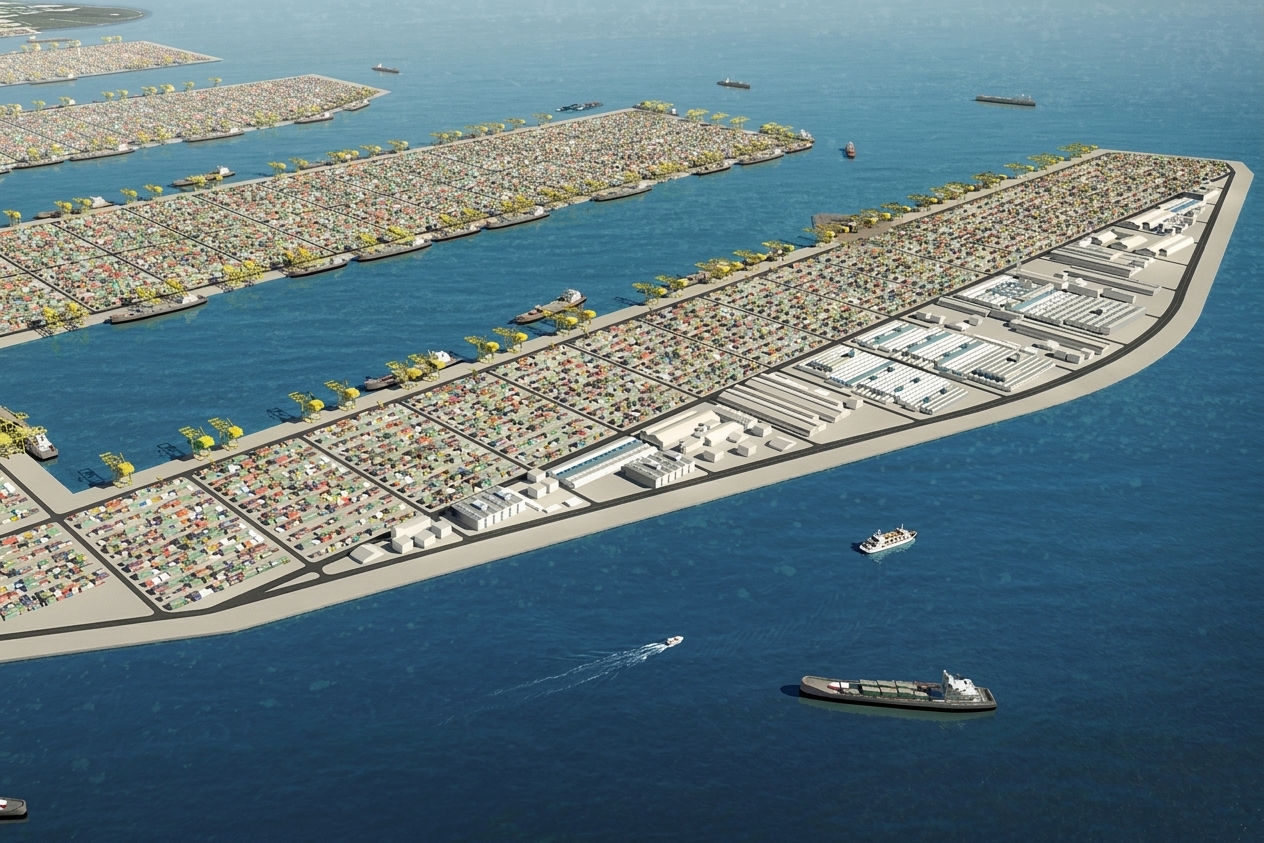
• Key Metrics: A S$20B+ project centralizing maritime trade into a consolidated 65-million-TEU automated facility. Phase 2 deploys 227 ten-story caissons along a 9.1-kilometer deep-draft quay (-16m draft), generating sustained demand for sulfate-resistant marine concrete, cathodic protection, and heavy-duty paving slabs.
Marina Bay Sands Expansion (Tower 4 & Arena)
• Type: Commercial & Hospitality | Status: Foundation Works
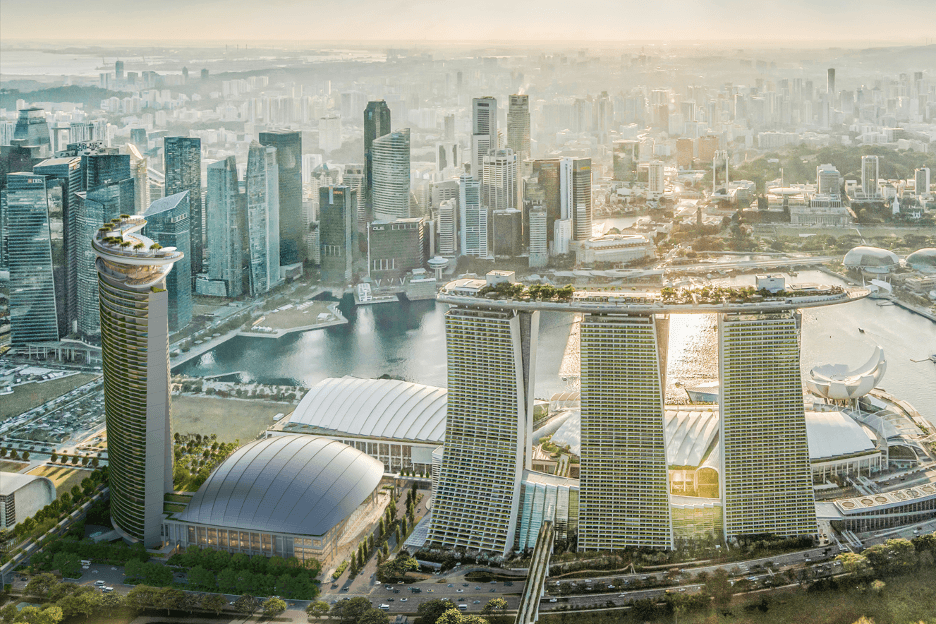
• Key Metrics: A US8.0B( S10.5B) development by Las Vegas Sands. Features an ultra-luxury 570-key hotel tower, sky deck, 15,300-seat arena, and 200,000 sq ft of MICE space. Procurement focuses on architectural steel, acoustic dampening systems, and high-performance, low-thermal-transmittance curtain walls.
Market Outlook
Core public infrastructure remains backed by sovereign reserves via the Development Fund, while commercial assets rely on institutional joint ventures, core-plus debt, and green finance frameworks.
Because strict labor and carbon quotas preclude low-cost manual site methods, contractor margins belong to specialists in Design for Manufacturing and Assembly (DfMA), advanced precast modules, Mass Engineered Timber (MET), and low-carbon materials. EPC firms equipped with digital twin workflows and automated fabrication lines will continue to lead procurement awards across the decade.
(Reported by BuildMartASEAN)