
Timor-Leste A$1B Infrastructure Pipeline Accelerates Ahead of Full ASEAN Accession
The civil construction sector is projected to expand at a 6.4% to 7.1% CAGR through 2031
(TIMOR-LESTE) Following Timor-Leste’s milestone accession as ASEAN’s 11th member state, the government in Dili has accelerated an infrastructure pipeline exceeding A1 billion (US650M–US$700M). Guided by the Strategic Development Plan 2011–2030, the IX Constitutional Government is upgrading regulatory, transport, and customs frameworks to align with regional standards.
Bridging eastern Indonesia and Northern Australia, modernizing these transit corridors is critical. Cross-border links with Indonesia’s East Nusa Tenggara and maritime routes via the Ombai and Wetar Straits underpin plans to establish a regional logistics hub. With the sovereign Petroleum Fund facing depletion within a decade, developing commercial gateways and transport corridors has become an urgent economic priority.
Market Baseline
• GDP Contribution: Generates 8.5% to 11.2% of non-oil GDP, serving as the largest private employer outside agriculture.
• Sector Growth: Grew 6.2% to 7.8% year-on-year across 2024–2025, driven by public capital works and bilateral grants for aviation and border routes.
• FDI Inflows: Averaged US45M to US60M annually, led by China, Australia, Indonesia, and Japan, with rising equity from Singapore.
• Urbanization & Pipeline Value: Urbanization stands at 32.5% (over 60% concentrated in Dili). Public and multilateral-backed project pipelines exceed US$1.2 billion.
Development Forecast (2026–2031)
The civil construction sector is projected to expand at a 6.4% to 7.1% CAGR through 2031.
• Strategic Priorities: Expanding international and regional airports; upgrading coastal corridors linking Dili, Batugade, and Suai; building flood-resilient urban drainage in Dili; and installing 100+ MW of solar and mini-hydro capacity.
• Catalysts & Risks: Preferential tariffs under the ASEAN Free Trade Area and concessional backing from the ADB, World Bank, and Australia's AIFFP drive the pipeline. Key risks include Petroleum Fund dependency, land tenure disputes, monsoon-related landslide hazards, and shortages of local civil engineers.
Key Flagship Projects
Presidente Nicolau Lobato International Airport (DIL) Expansion
• Type: Aviation Infrastructure | Status: Under Construction
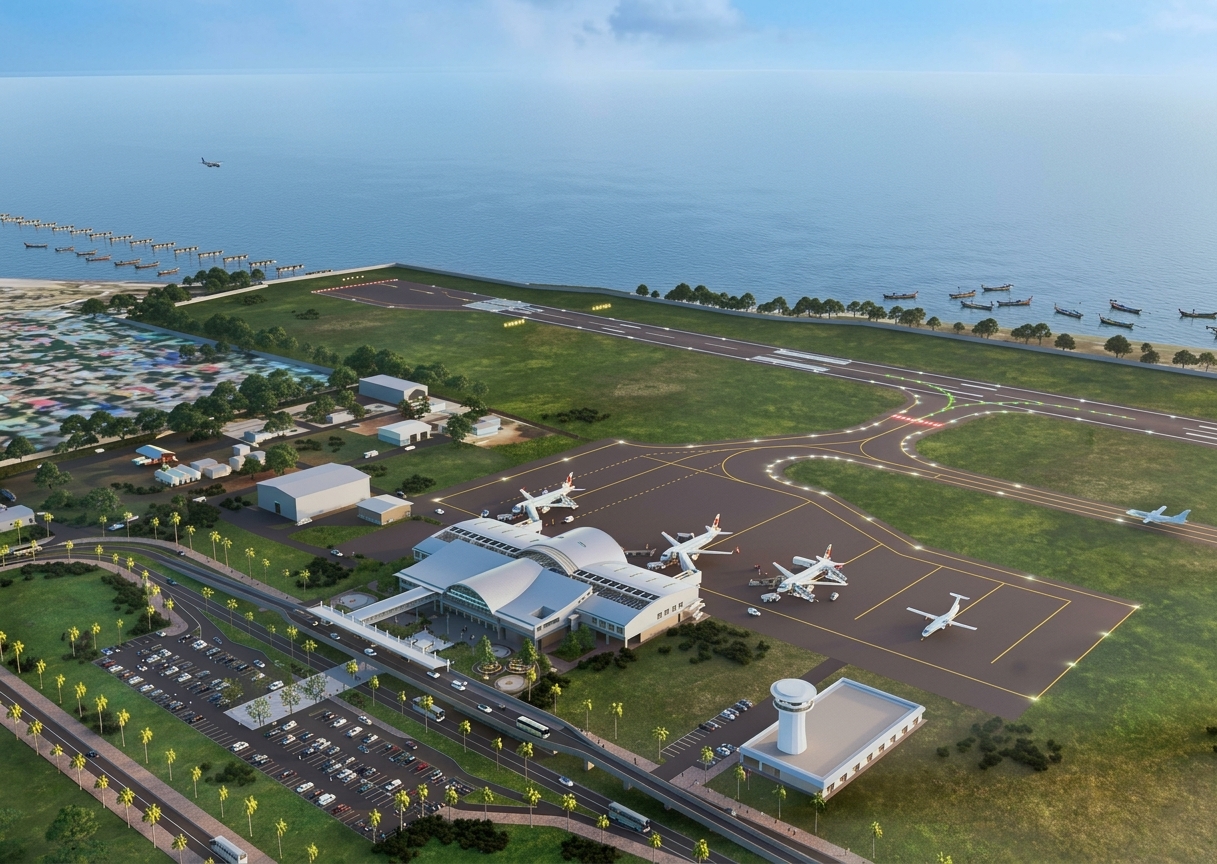
• Key Metrics: A US250M+(approx.A380M) upgrade co-financed by the ADB, JICA, and Australia (AIFFP). Extends the runway to 2,100 meters (progressing to 2,500 meters) for Code 4C aircraft, adding a 16,500-sqm passenger terminal and a control tower. Generates demand for airfield-grade asphalt, structural steel trusses, and marine armor rock.
Dili International Conference Centre & Waterfront Precinct
• Type: Commercial Real Estate & Civic | Status: Under Construction
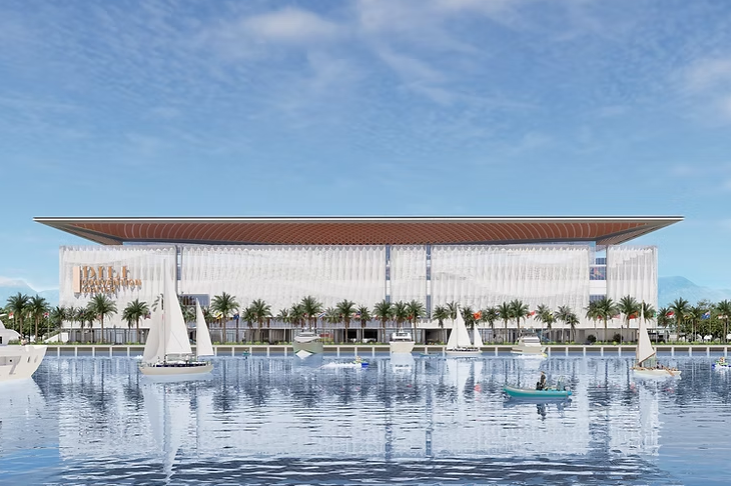
• Key Metrics: A US120M(approx.A185M) redevelopment of the former Dili Port for ASEAN summits and business events. The master plan includes a 3,000-delegate plenary hall, exhibition areas, a hotel, and a marina. Material demand centers on architectural glazing, acoustic insulation, post-tensioned slabs, and marine piling.
National Road Network Climate Resilience Program
• Type: Transport Corridors | Status: Phased Procurement & Construction
• Key Metrics: A US310M+(approx A475M) initiative funded by the state, ADB, and World Bank to upgrade routes linking Dili, Manatuto, Baucau, and Suai. Works include slope stabilization, reinforced retaining walls, and concrete box culverts, driving major procurement of cement, crushed aggregates, gabion wire, and heavy earthmoving rentals.
Market Outlook
Because domestic contractors are primarily limited to tier-3 earthworks and low-rise building, major EPC contracts remain led by international joint ventures from China, Indonesia, and Portugal.
Aside from river sand and gravel, 100% of structural steel, rebar, high-grade cement, bitumen, and MEP switchgear must be imported through Tibar Bay Port or the Motaain border crossing. Suppliers and contractors that establish local partnerships and secure reliable logistics early will gain a competitive advantage as Timor-Leste integrates into ASEAN.
(Reported by BuildMartASEAN)