
Vietnam Approves US$67B High-Speed Rail Project
1,541-km Corridor from Hanoi to HCMC to Unlock Prime Real Estate and Construction Pipelines Across 20 Provinces.
(VIETNAM) Vietnam’s National Assembly has approved the US$67.34-billion North-South Express Railway. For ASEAN property developers, institutional investors, and construction contractors, this mega-infrastructure initiative serves as a major economic catalyst, unlocking extensive transit-oriented development (TOD) and industrial corridors across mainland Southeast Asia.
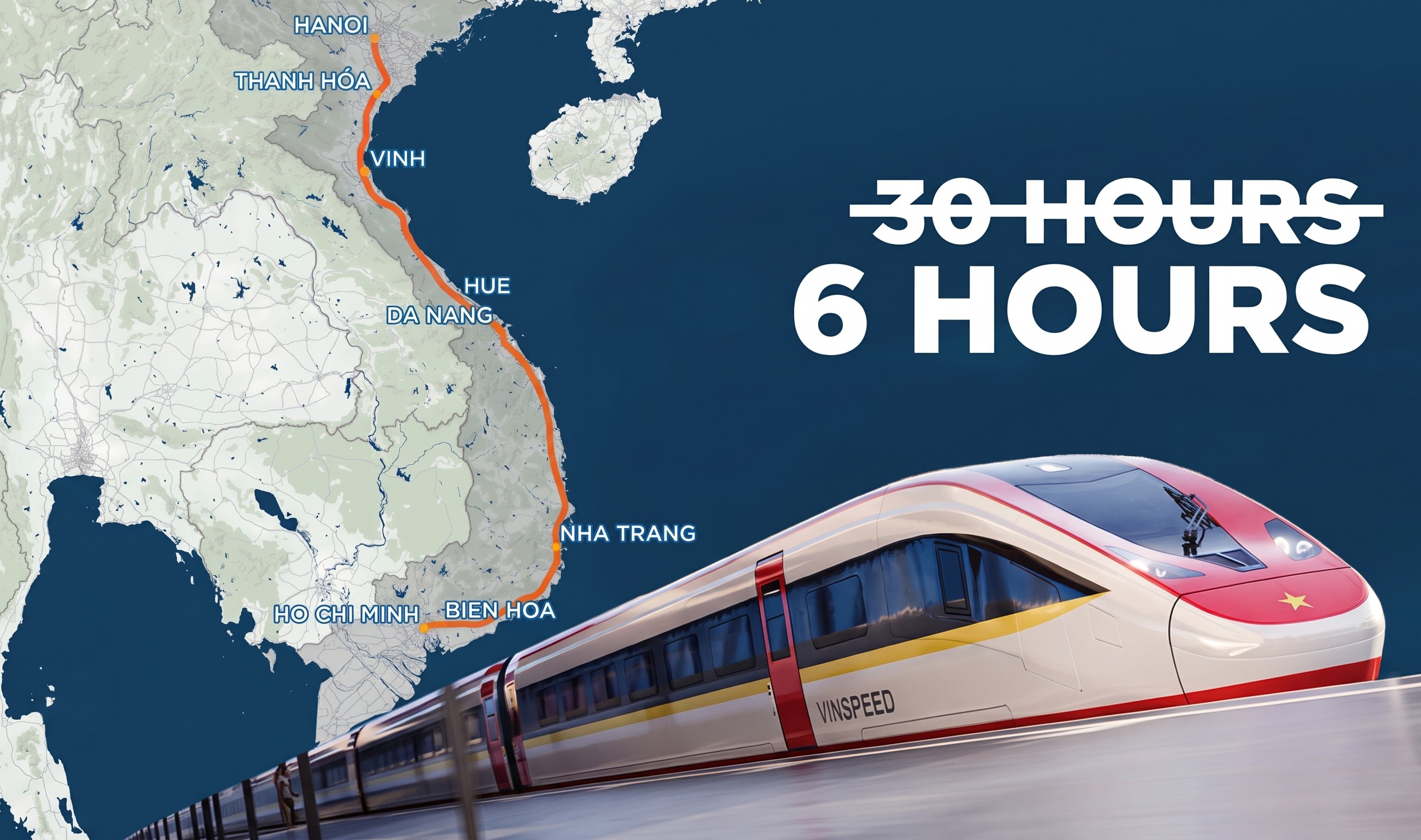
Description and DesignThe North-South Express Railway is an electrified, double-track standard-gauge line spanning the length of Vietnam. Designed for speeds up to 350 km/h, the line slashes travel times between Hanoi and Ho Chi Minh City from more than 30 hours to under six hours.
To handle complex coastal floodplains, karst topography, and rugged mountain geology, over 60% of the corridor relies on elevated viaducts and tunnels. The elevated design preserves existing surface rights-of-way (ROW), prevents traffic gridlock, and protects track infrastructure from seasonal monsoons.

The master plan integrates three commercial drivers:
1. Land Value Capture (LVC): Provinces can auction surrounding land parcels for mixed-use commercial, residential, and logistics assets to recover public infrastructure outlays.
2. Transit-Oriented Development (TOD) Nodes: Stations are planned as high-density vertical hubs featuring multi-modal passenger concourses integrated with retail centers, hotels, and Grade-A office space.
3. Regional Decentralization: High-speed connections between secondary provinces, deep-sea ports, and primary metropolitan centers help shift manufacturing and logistics outward to relieve pressure on primary urban cores.
LocationThe 1,541-kilometer route spans 20 provinces and centrally administered cities:
Northern Hub: Starts at Ngoc Hoi Station in southern Hanoi, passing through the industrial centers of Ha Nam, Nam Dinh, and Ninh Binh.
Central Coastal Belt: Links coastal growth hubs including Thanh Hoa, Nghe An (Vinh), Ha Tinh, Quang Binh, Da Nang, Quang Nam, Binh Dinh, and Khanh Hoa (Nha Trang).
Southern Hub: Traverses Ninh Thuan, Binh Thuan, and Dong Nai (connecting to Long Thanh International Airport) before terminating at Thu Thiem Station in Ho Chi Minh City.
Infrastructure Standards: Dual-track 1,435 mm standard gauge, 25 kV AC overhead catenary electrification, and ETCS Level 2 / CTCS-3 equivalent signaling.
Station Network: 23 dedicated passenger stations and 5 freight and maintenance hubs.
Grade Separation: Over 60% elevated viaducts and tunnels to avoid level crossings and mitigate flood risks.
Multimodal Connections: Direct links to Hanoi and Ho Chi Minh City metro networks, major air hubs (Noi Bai and Long Thanh), and regional dry ports.
Project Name
North–South High-Speed Railway (Đường sắt tốc độ cao Bắc–Nam)
Developer
Ministry of Transport (MoT) / Vietnam Railway Project Management Board
Engineering Consultants
TEDI-TRICC-TEDIS joint venture alongside international advisory partners
Location
Hanoi to Ho Chi Minh City (1,541km across 20 provinces/cities)
Clearance & Height
Viaduct clearance of 8–25m; catenary wire height ~5.3 m; station buildings reach 35–50m depending on local TOD zoning.
Site Area
Approximately 10,827 hectares acquired for railway corridors, stations, and depots.
Site Coverage
17–25 m wide linear track corridor; station plots span 15–30 hectares each, alongside 10 maintenance depots covering over 500 hectares.
Status
Investment policy approved by the National Assembly; Front-End Engineering Design (FEED) and feasibility studies underway.
Expected Completion
Groundbreaking set for 2026–2027 and full commercial operations planned by 2035.
(Reported by BuildMartASEAN)