
DPWH Commences Overhaul of EDSA: Major Rehabilitation Modernizes Metropolitan Manila’s Primary Arterial Transit Corridor
Department of Public Works and Highways deploys high-grade SMA paving, full-depth asphalt reclamation, and accelerated rapid-curing techniques across 23.8 kilometers to upgrade logistics efficiency, bus rapid transit lanes, and land valuation along Manila's core backbone.
The Department of Public Works and Highways (DPWH) has formally launched the multi-billion-peso EDSA Major Rehabilitation and Modernization Project. Spanning 23.8 kilometers from Makati City to Caloocan City, this strategic civil infrastructure undertaking aims to revitalize Metro Manila’s most heavily trafficked thoroughfare. Designed to overcome decades of surface degradation, subsurface base failures, and persistent congestion, the project employs advanced pavement engineering and accelerated construction methodologies to safeguard urban logistics and enhance transit predictability without triggering prolonged arterial paralysis.
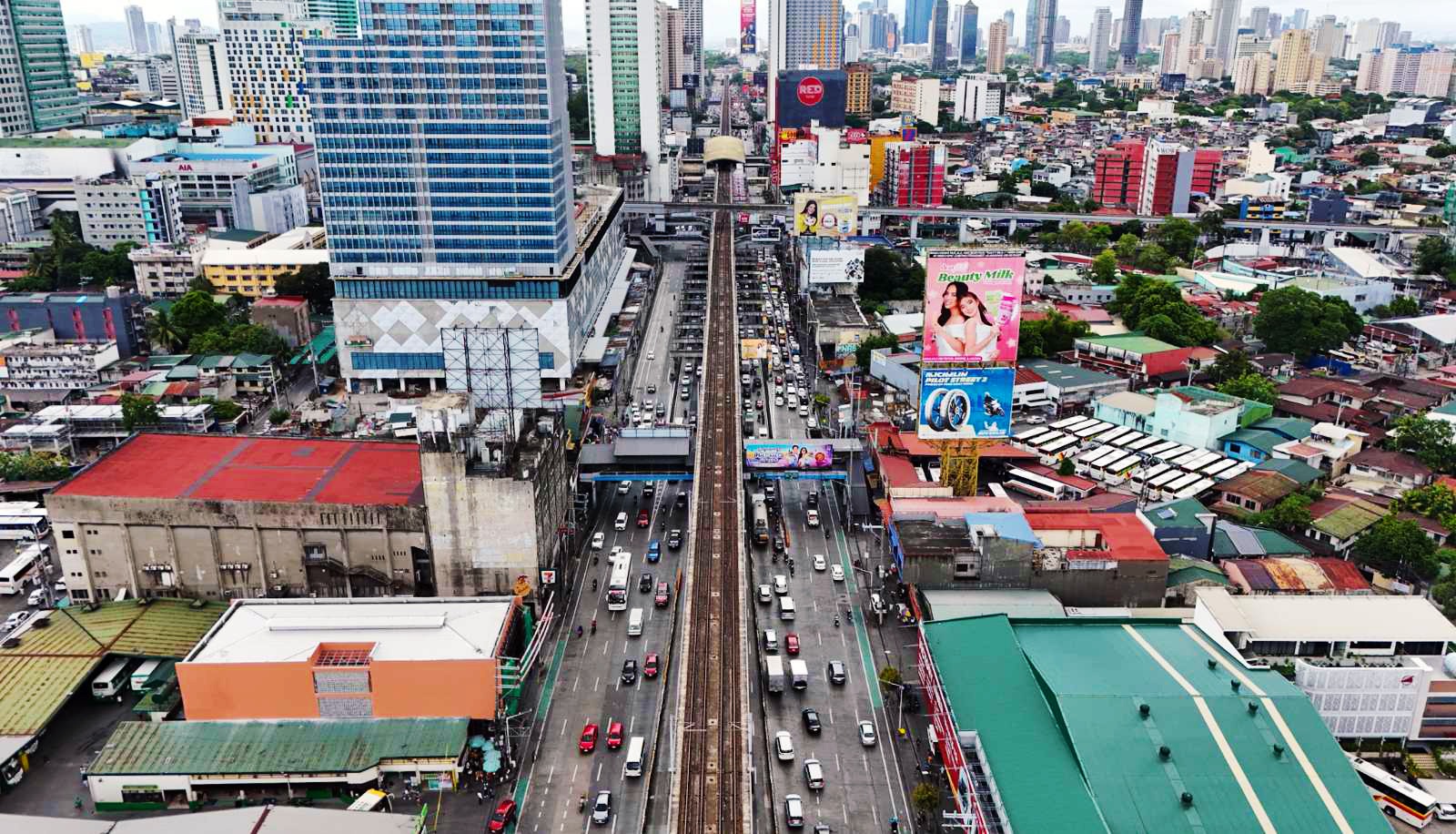
For institutional real estate developers and international investment funds, the modernization of Epifanio de los Santos Avenue (EDSA) represents a structural catalyst. By significantly reducing transit friction and improving corridor capacity, the intervention stabilizes property valuations across primary Central Business Districts (CBDs)—including Makati, Ortigas Center, Araneta City, and Bonifacio Global City (BGC) access points—while unearthing high-density re-development potential in secondary transit-oriented nodes.
The rehabilitation program transitions EDSA from an aging, high-maintenance asphalt-over-concrete arterial into a high-capacity, climate-resilient urban transit corridor. The engineering design prioritizes structural longevity, enhanced pavement skid resistance, optimal surface drainage, and seamless integration with the EDSA Busway system.
Concept
1. Full-Depth Asphalt Reclamation (FDAR): In-situ recycling and chemical stabilization of existing degraded base layers to establish a high-load-bearing structural foundation capable of enduring high equivalent single-axle loads (ESALs).
2. Stone Matrix Asphalt (SMA) Overlay: Application of high-performance polymer-modified SMA wearing courses, providing superior rutting resistance, reduced hydroplaning potential, and lower road noise emissions.
3. Accelerated Concrete Re-blocking: Rapid-curing rigid pavement rehabilitation utilizing 24-hour high-early-strength concrete mixes at severe bus bay drop-off zones and heavy-load intersections.
4. Dedicated Busway & BRT Infrastructure Optimization: Structural segregation, re-engineered boarding platforms, and durable physical barrier realignment dedicated to the high-capacity EDSA Carousel system.
5. Smart Infrastructure Integration: Installation of pre-embedded traffic monitoring sensors, weigh-in-motion (WIM) systems to combat overweight freight vehicles, and upgraded stormwater drainage hydraulics.
Location
1. Southern Terminus: Magallanes Interchange / Chino Roces Avenue Extension Connection (Makati City).
2. Core CBD Traversal: Direct alignment passing through the commercial and financial heartlands of Makati City, Mandaluyong City, Pasig City (Ortigas Center), and Quezon City (Cubao / Araneta City).
3. Northern Terminus: Monumento Circle / Samson Road Intersection (Caloocan City).
4. Intermodal Connectivity: Direct alignment intersecting major arterial routes including SLEX, Skyway Stage 3, Shaw Boulevard, Ortigas Avenue, Quezon Avenue, and NLEX.
Key Features
1. Continuous Off-Peak Execution Window: Civil works are strictly scheduled during night shifts (22:00 to 05:00) and weekends using modular construction panels to maintain weekday throughput.
2. Polymer-Modified Bitumen (PMB) Technology: Enhanced bitumen binders designed to withstand extreme tropical heat cycles, preventing bleeding and surface deformation under heavy vehicular queues.
3. Subsurface Micro-Drainage Networks: Installation of continuous longitudinal edge drains and geo-composite filtration layers to eliminate water entrapment—the leading cause of premature pavement stripping.
4. Reflective Thermoplastic & Solar Marker Integration: High-visibility micro-prismatic pavement markings paired with solar LED road studs to improve driver guidance during nighttime operations.
5. Pedestrian & Last-Mile Integration: Structural fortification and expansion of key pedestrian footbridges and intermodal transit transfer points along the arterial backbone.
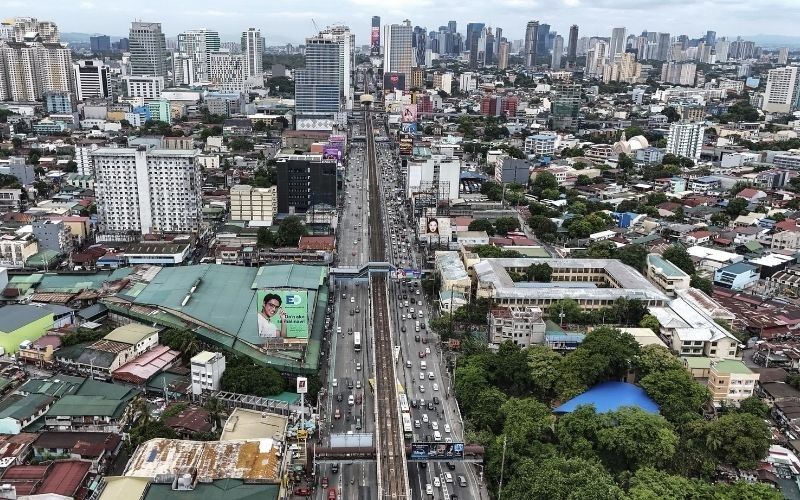
The economic ripple effects of the EDSA overhaul extend far beyond reduced commuter travel times. Historically, urban roadway deterioration and severe traffic bottlenecking have dampened floor-area-ratio (FAR) utilization efficiency for properties directly fronting EDSA. With the transition to a modern, durable asphalt framework and optimized transit lanes, accessibility coefficients across adjacent parcels are set to improve markedly.
Real estate developers can anticipate heightened demand for high-density mixed-use, commercial office, and urban logistics assets along the corridor. Furthermore, as the DPWH and DOTr continue to fortify the EDSA Busway infrastructure, property values near major transit stops (such as North Avenue, Ortigas, Guadalupe, and Taft) will likely command premium lease rates, driven by tenants seeking seamless transit access for workforce talent.
Project
EDSA Major Rehabilitation & Modernization Project
Developer
Department of Public Works and Highways (DPWH) in partnership with Department of Transportation (DOTr) & Metropolitan Manila Development Authority (MMDA)
Architect
DPWH Bureau of Design (BOD) in consultation with Japan International Cooperation Agency (JICA) Infrastructure Advisory Group
Location
Epifanio de los Santos Avenue (EDSA Corridor), traversing Makati, Mandaluyong, Pasig, Quezon City, and Caloocan City, Metro Manila, Philippines
Height
At-grade roadway alignment with elevated flyover structures clearance heights standard at 5.27 meters across interchanges
Site Area
Approximately 1,190,000 sq.m (23.8 km length × 50 m average Right-of-Way width)
Site Coverage
10-lane dual-carriageway configuration (5 lanes per direction including dedicated EDSA Busway median lane)
Status
Under Construction
Expected Completion
Year 2027