
Metro Manila Subway Sparks Transit-Oriented Development Surge
The Philippines’ first underground rail network drives subterranean urbanism, cross-corridor connectivity, and multi-billion-peso land value appreciation across a 33-kilometer spine.
Backed by Official Development Assistance (ODA) loan packages from the Japan International Cooperation Agency (JICA), the Metro Manila Subway Project (MMSP) represents the most ambitious mass-transit infrastructure undertaking in Philippine history. Spanning 33 kilometers, the fully underground trunkline links northern Metro Manila directly to the Ninoy Aquino International Airport (NAIA) Terminal 3 and the southern transit corridor at Bicutan.
The subway is fundamentally restructuring Metro Manila’s growth model around Transit-Oriented Developments (TODs) pedestrian-first, high-density commercial and residential clusters directly linked to station portals. With design capacity exceeding 500,000 daily commuters, land values and floor-area ratios (FAR) surrounding strategic station nodes in Quezon City, Ortigas Center, Bonifacio Global City (BGC), and Arca South are climbing rapidly.
Advanced Engineering & Subterranean Design
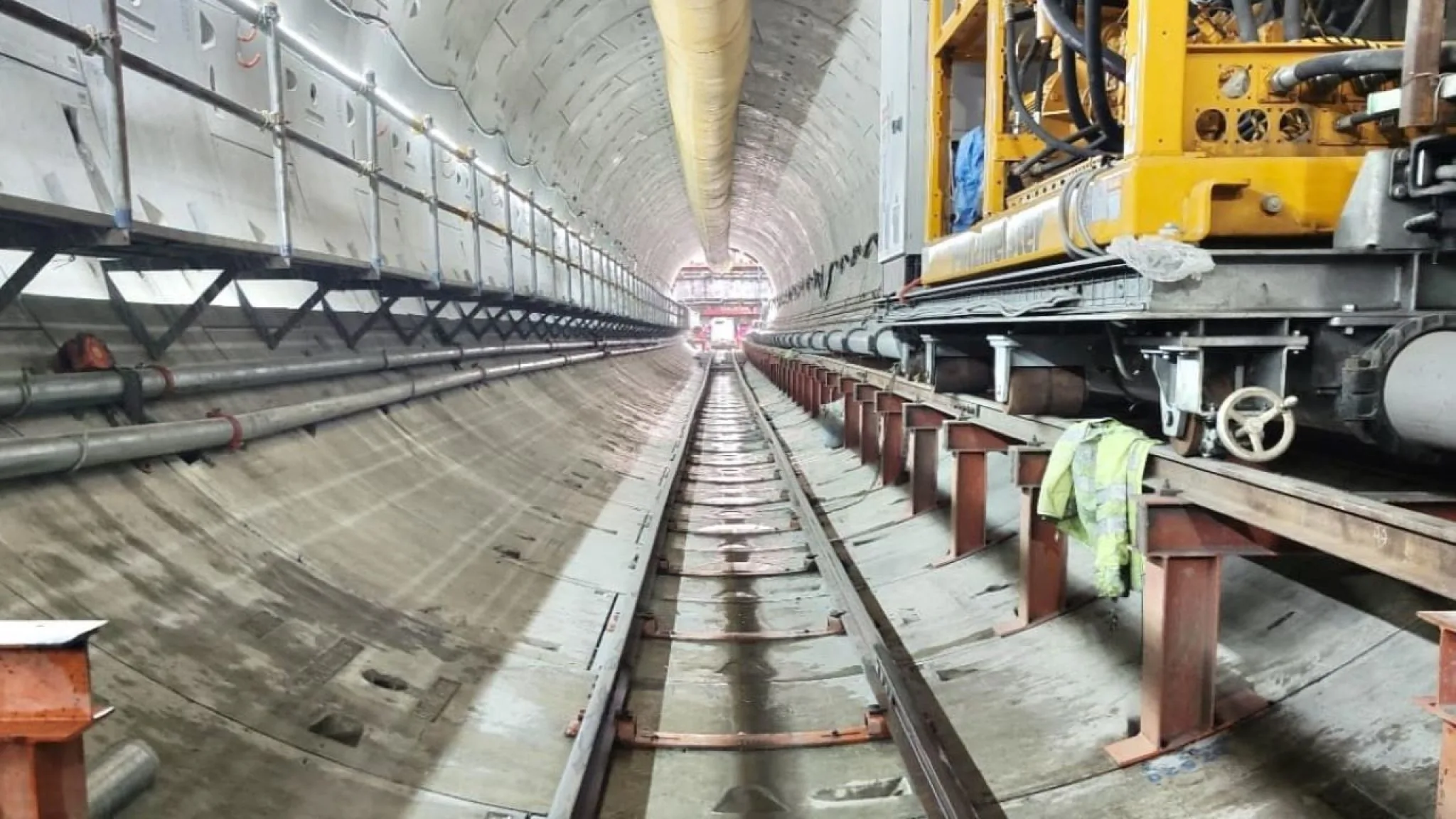
• Mechanized Tunneling: Earth Pressure Balance (EPB) Tunnel Boring Machines (TBMs) are boring twin tunnels through soft clays, alluvium, and tough Guadalupe Formation volcanic tuff, avoiding major surface disruption.
• Disaster Resilience Standards: Engineered to strict Japanese seismic and anti-flood benchmarks, integrating seismic dampers, automated flood barriers at portal access ramps, and forced-air tunnel ventilation shafts.
• Rolling Stock & Signaling: The fleet features 240 Japanese-manufactured Sustina electric train cars deployed in 8-car sets, equipped with full-height platform screen doors (PSDs) and automated Communications-Based Train Control (CBTC) moving-block signaling.
Seamless Interconnectivity & Corridor Restructuring
• Seven Key Cities: Traverses Valenzuela, Quezon City, Pasig, Makati, Taguig, Parañaque, and Pasay.
• Multimodal Rail Integration: Built with physical, fare-integrated interchanges across Metro Manila’s passenger network:
a) North Avenue & Quezon Avenue (LRT Line 1, MRT Line 3, MRT Line 7)
b) Anonas (LRT Line 2)
c) Ortigas North & South (MRT Line 3 and upcoming MRT Line 4)
d) FTI & Bicutan (North–South Commuter Railway / NSCR)
• Dedicated Airport Branch: Establishes the capital's first direct heavy-rail link into NAIA Terminal 3, slashing travel time between Valenzuela and the airport from over 1.5–2 hours by road to roughly 35–40 minutes.
Underground Urbanism & Real Estate Impact
Major property developers are actively securing subterranean connection rights and master-planning direct underground pedestrian links within a 500-meter walkshed of station portals. Developments offering direct, weather-proof subway concourse connections command higher pre-leasing velocity, premium office rental rates, and lower vacancy risks than isolated standalone towers.
Inside all 17 multi-level underground stations, concourse and mezzanine levels are designed for high-density retail, dining, and daily services, introducing subterranean retail commercialization at a scale previously unseen in the Philippine market.
Project
Metro Manila Subway Project (MMSP) / MRT Line 9
Developer
Department of Transportation (DOTr)
Engineering Consultants
Oriental Consultants Global, Tokyo Metro Co Ltd (Joint Ventures)
Route Alignment
East Valenzuela to Bicutan (with NAIA Terminal 3 spur)
Length and Depth
33 kilometers and 14 to 35 meters underground
Number of Stations
17 underground stations
Status
Under Construction
Expected Completion
Northern demo run targeted by 2028; full commercial opening targeted for 2032
(Reported by BuildMart Philippines)